


This project is part of the Nordic Forms of Living Together (NFoLT).
Introduction to the topic
In recent years, interest has grown in Nordic models of community-oriented living, both among architects and the public, in the Nordics and abroad. These alternative housing schemes—designed to encourage closer social connections, affordability, and sustainable living—are seen as promising responses to major challenges in modern housing, including loneliness, high costs, and environmental impact.
Among the Nordic Forms of Living Together, some models—such as co-housing (bofællesskab) or the Danish indirectly owned tenure system (andel)—have been studied more and mostly remain in need of contemporary revision, while others historically have received relatively little scholarly attention, particularly internationally. The kollektiv, the Nordic variant of the residential commune, is one such underexplored model. It represents a typology associated with a dense, slow, and community-oriented way of life.
Project details
This project addresses the need for systematic, research-driven analysis of the kollektiv. From an architectural perspective, to identify key residential archetypes and establish clear definitions that distinguish it from other typologies; and from a socio-demographic perspective, to provide a basis for demystifying and clarifying the demand and potential of this form of collective living.
In collaboration with the Danish Association of Kollektiver (Kollektivforening), the project will generate a comprehensive cartography of kollektiver within Copenhagen and identify paradigmatic cases for deeper analysis. This dual approach—both extensive and intensive—will allow for comparative evaluation across spatial, social, and temporal dimensions.
Throughout the project, Research Assistants (RAs) will be trained in diverse fieldwork methodologies, both quantitative and qualitative, ranging from problem formulation and research design to data analysis and academic writing. The work will be conducted in collaboration with volunteers from the association as well as other potential academic partners. The expected outcome is a series of critical articles written by the RAs, providing them with experience in architectural research and scientific writing while contributing to the collective mapping of one of Copenhagen’s most significant community-oriented forms of living.
These projects are part of the Nordic Forms of Living Together (NFoLT) and have open Research Assistant positions:
- Retracing the community-oriented housing experiments of Gunnar Hoydal in the Faroe Islands
Selected relevant publications:
- Rask, J. R. & Gjerding, H. R. (2023) Bo – Fælles – Skab – Håndbog for kollektiver, bygge- og bofælleskaber [Manual for kollektiver, co-houses, and construction cooperatives]. Hovedland, Copenhagen. ISBN 978-87-7070-856-2
- Tietjen, A., Riesto, S. & Skov, P. (Eds.). (2007). Forankring i forandring.Christiania og bevaring som ressource i byomdannelse [Anchoring in change. Christiania and conservation as a resource in urban transformation]. Arkitektskolen Forlag, Århus. ISBN 978-87-90979-21-8
- Rieiro Díaz, R. (2023). Make yourself at home: A critical retracing of the legacy of the housing utopias built in the Nordic countries in the seventies (Doctoral thesis, E.T.S. Arquitectura, Universidad Politécnica de Madrid).
Prerequisites
Architecture major: Students with experience using AutoCAD and/or Rhino for drawing and modeling will be well prepared for this project. Students should be able to develop a graphic language for communicating their research.
Other majors: Must be able to utilize the Adobe software package proficiently.
Some knowledge of architectural history—particularly developments in the late 20th century—would be an advantage for understanding the research framework, but is not required.
Additional research application required
You will need to submit an additional research application through Student Registration in order to enroll in this course.
To submit your research application, you must already be admitted to DIS.
All research application materials must be submitted on the following dates by 23:59 Central European Time:
- November 1 for spring semester applicants
- May 1 for fall semester applicants
Complete your additional research application through Student Registration.
Syllabus
The syllabus for this course is currently under development. A draft syllabus will be listed here as soon as it is available.
Faculty
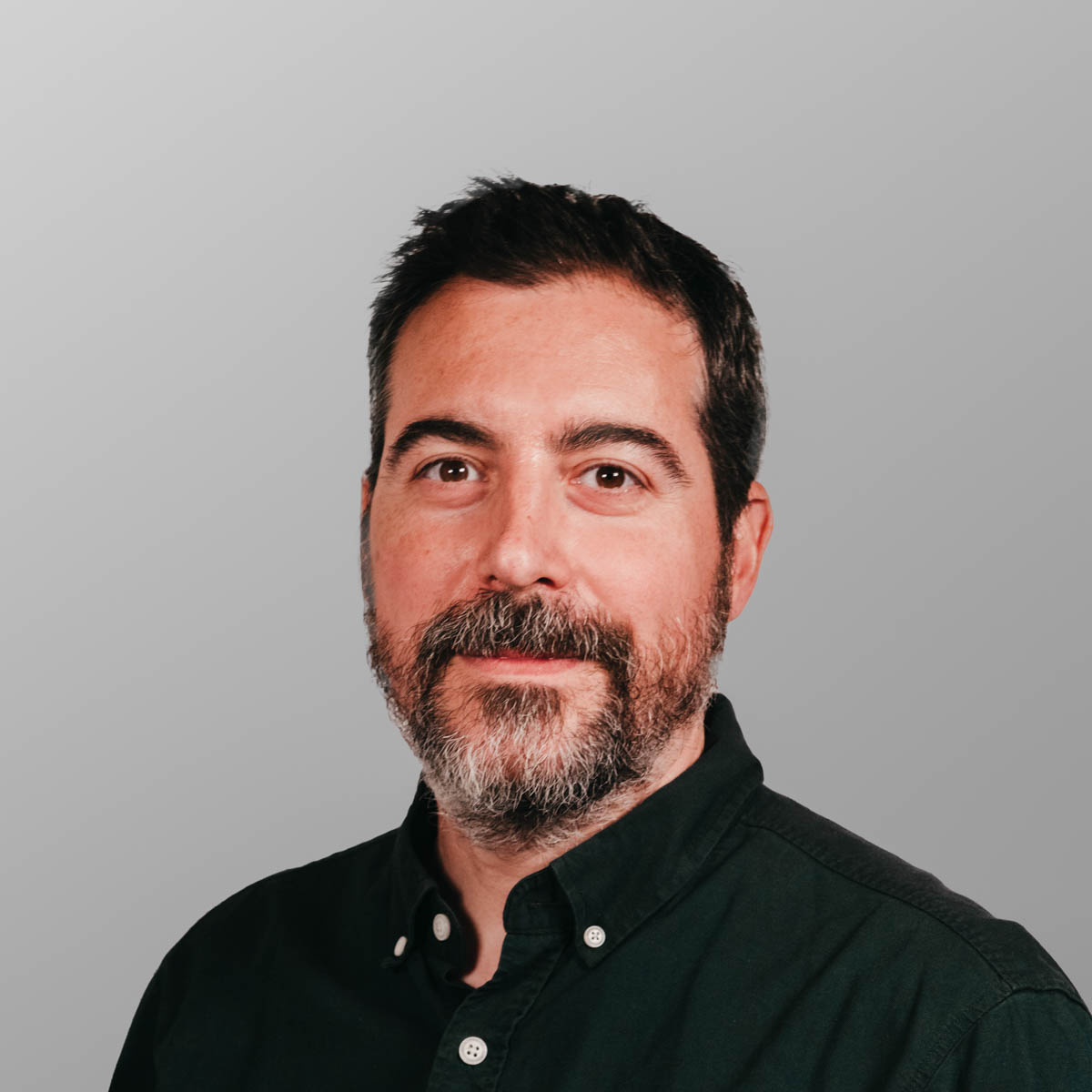
Heitor Garcia Lantarón
FacultyPh.D. (Department of Architectural Design, Escuela Técnica Superior de Arquitectura, Universidad Politécnica de Madrid, Spain, 2016). Architect. Doctoral Thesis: Danish Examples of Housing for the Elderly. Academic and professional interests focused on housing challenges related to the ageing process and addressing challenges to enhance the domestic space quality for any age and (dis)ability. Previously employed at Nieto Sobejano Archietcts, 2008-2009, and Herzog & de Meuron, 2006-2008. With DIS since 2017.

Rodrigo Antonio Rieiro Diaz
FacultyPh.D. (Architecture, Universidad Politécnica de Madrid (ETSAM), 2023). Architect Cand. arch, ERIK, 2022-present. Architect Cand. arch, WERK Ark., 2019-2022. Architect Cand. arch, Dorte Mandrup, 2016-2019. Architect Cand. arch, Mikkelsen Ark., 2015-2015. Architect Cand. arch, ERIK, 2022-present. Architect Cand. arch, Effekt, 2012-2015. Architect Cand. arch, Ábalos+Sentkiewicz, 2011-2012. With DIS since 2023.
Research Assistantship FAQ
Learn more about research at DIS.